German Grid Fees Fell in 2026: What It Means for Your Balcony Solar Battery
 7 min read
As of 03.09.2026 | Status: IN FORCE since 01.01.2026
German grid fees (Netzentgelte) went down in 2026. Not up, which is what plenty of older buying guides in this product category still claim. Good news for your electricity bill. Slightly awkward news for the payback maths on your balcony solar battery, because every kilowatt-hour you consume yourself now saves you a couple of cents less.
So does that make the battery a bad buy?
It doesn't. But run the numbers anyway, with the real figures rather than a gut feeling.
What actually changed with German grid fees 2026
The reason German grid fees fell in 2026 is a new federal subsidy. Since 1 January 2026 the federal government has subsidised transmission grid fees. The legal basis is the new § 24c EnWG, passed by the Bundestag on 13.11.2025 and the Bundesrat on 21.11.2025. According to the German federal government, €6.5 billion flows in from the Klima- und Transformationsfonds. For a household using 3,500 kWh a year, that's roughly €100 to €130.
The clearest drop sits right at the top of the grid. At the transmission level, solarbranche.de reports the fee dropping from 6.65 to around 2.86 cents per kilowatt-hour. More than half.
But households don't see all of that. Figures from strom-report.com put the 2026 household reduction at roughly 17 percent nationally, so about 2 cents per kilowatt-hour.
For your electricity bill that means German grid fees are falling noticeably in 2026, even if not every cent reaches you. And that national figure is still just an average, not a promise. How much lands on your own bill depends on your distribution grid operator. The BDEW says plainly that no blanket statement is possible about the size of the relief in an individual case, because households connect through the unsubsidised distribution grid. Your annual statement is a better source than any national average.
The storage maths with 2026 grid fees, honestly
A balcony battery doesn't earn its money on the 2026 grid fee. It earns it on the retail price you avoid paying, because you use your own solar power in the evening instead of pushing it into the grid at midday.
When that retail price falls, so does the value of every stored kilowatt-hour. Do the arithmetic yourself:
| Step | Value | Source |
|---|---|---|
| Typical 2025 retail rate | 36 ct/kWh | market band 30 to 40 ct/kWh, infranken.de |
| 2026 grid fee reduction | around 2 ct/kWh | strom-report.com, as of 2026 |
| Value per self-consumed kWh in 2026 | around 34 ct/kWh | our own calculation from the two rows above |
| Drop per kWh | around 5 to 6 percent | our own calculation |
A balcony solar system with storage typically moves 500 to 850 kWh a year into self-consumption. Two cents less per kilowatt-hour therefore costs you €10 to €17 a year, measured against an annual saving of roughly €100 to €180.
infranken.de's own worked examples put payback for a balcony system with storage at as little as 1.5 to 3 years, depending on the model and your self-consumption rate. Losing a tenth of the saving shifts that point by a few weeks. That's the whole effect.
On a unit costing about €300, it barely registers. How storage cost, self-consumption rate and electricity price trade off against each other in detail is covered in our full payback breakdown for balcony batteries.
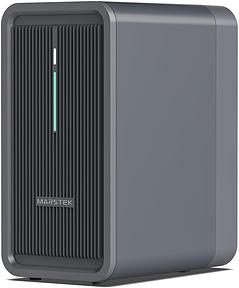
Marstek B2500 Speicher 2240Wh für Balkonkraftwerke
View at AmazonAffiliate link. Buying through it earns us a commission; the price stays the same for you.
§ 14a EnWG is a different rule entirely
These two get mixed up constantly. The separate discount under § 14a EnWG applies only to controllable loads with a grid connection above 4.2 kW. That means wallboxes, heat pumps, air conditioning or a large home battery. Most balcony solar batteries sit well below that.
In short: § 14a EnWG almost certainly doesn't touch your balcony battery. It falls under the general grid fee, the one that dropped in 2026.
Storage-specific grid fees arrive in 2030 at the earliest
The second common worry sounds like this: is my battery about to get its own time-variable grid fee?
The Bundesnetzagentur took a position on 27.05.2026. Dynamic grid fees for storage are to be introduced in 2030 at the earliest, and ideally not before 2033. Regulator president Klaus Müller explained the caution this way: "We weight trust protection higher than in our previous proposals."
On top of that, the existing grid fee exemption for battery storage in the low-voltage grid stays in place until at least 4 August 2029, as reported by pv magazine Deutschland on 27.05.2026.
Buy now and you're buying into stable rules.
Anker SOLIX 2 Plus Solarbank (1,6 kWh)
View at AmazonAffiliate link. Buying through it earns us a commission; the price stays the same for you.
What to actually do about it
Two things are worth your time this autumn, with German grid fees 2026 in mind.
First, dig out your annual statement and find the grid fee line. The national average tells you very little about your own network operator, and that number is the one feeding your storage calculation.
Second, if you were already thinking about a battery, the reduction changes almost nothing about the decision. Purchase price and your self-consumption rate decide the payback, not 2 cents of grid fee. If you're still buying, 0% VAT on balcony solar storage cuts the purchase price directly, independent of the grid fee. Retrofitting an existing balcony system is its own question, and our retrofit guide for balcony batteries covers which combinations work.
Growatt NOAH 2000 Batteriespeicher 2,048 kWh für Balkonkraftwerke
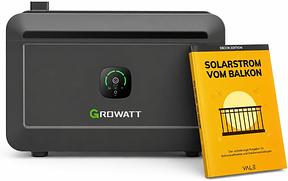
Growatt NOAH 2000 Batteriespeicher 2,048 kWh für Balkonkraftwerke
View at AmazonAffiliate link. Buying through it earns us a commission; the price stays the same for you.
All products from this post
The ones we named above are marked; the rest are alternatives in the same category.
Affiliate notice: As an Amazon Associate, we earn from qualifying purchases. Product prices and availability are subject to change.
Frequently Asked Questions
Did German grid fees rise or fall in 2026?
German grid fees 2026 are down, not up. Household grid fees dropped roughly 17 percent nationally compared with 2025, around 2 cents per kilowatt-hour. The cause is a €6.5 billion federal subsidy from the Klima- und Transformationsfonds, set out in the new § 24c EnWG. Figures come from the German federal government and strom-report.com, as of 2026.
Who pays grid fees?
Every electricity customer does, automatically, through the retail rate. Grid fees are the regulated charge for transporting power and make up roughly a fifth of a typical household bill. You never transfer them separately. Your supplier passes them on to the network operator.
Does the reduction make my balcony solar battery unprofitable?
No. The battery saves you the retail rate you would otherwise pay. If that rate drops by around 2 cents, you lose roughly €10 to €17 a year at 500 to 850 kWh of self-consumption. That moves a payback of just a few years by weeks, not years.
Does the § 14a EnWG discount apply to balcony batteries?
Usually not. § 14a EnWG only kicks in for controllable loads with a grid connection above 4.2 kW, meaning wallboxes, heat pumps or large home batteries. Typical balcony solar batteries sit well under that threshold and fall under the general grid fee instead.
How long does the grid fee exemption for battery storage last?
According to the Bundesnetzagentur and pv magazine Deutschland on 27.05.2026, the exemption for battery storage in the low-voltage grid runs until at least 4 August 2029. Storage-specific dynamic grid fees are planned for 2030 at the earliest, and ideally not before 2033.