0% VAT on Balcony Solar Storage in Germany: Who Benefits and What It Actually Saves
 13 min read
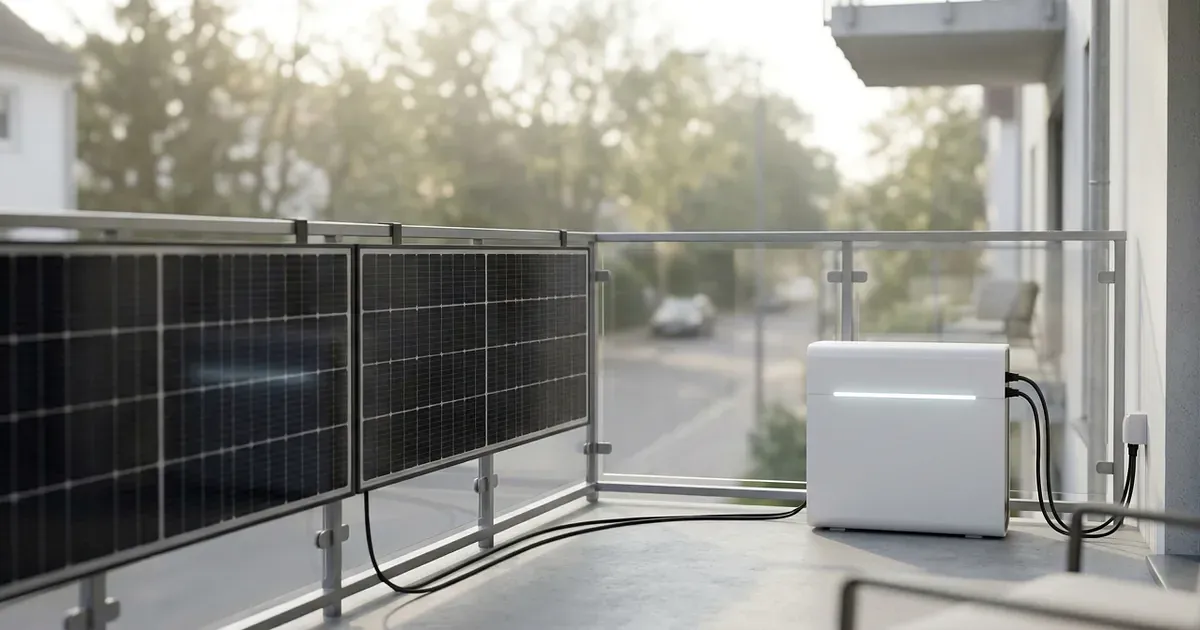
Buy a battery for a German balcony solar system in 2026 and the invoice will almost certainly show a zero where the VAT line should be. That is not a retailer discount or a limited promotion. It is the zero rate under § 12 (3) of the German VAT Act (Umsatzsteuergesetz, UStG), in force since 1 January 2023 — and one of the most consistently misquoted rules in the German solar market.
This article covers the fiscal side only: what the statute says, which two thresholds decide whether a balcony battery is covered at all, and how much money is actually involved. Whether a battery pays for itself is a separate question, answered in our piece on balcony storage payback.
What the statute actually says
The legal basis is a single sentence. § 12 (3) no. 1 UStG sets a 0% rate for
"die Lieferungen von Solarmodulen an den Betreiber einer Photovoltaikanlage, einschließlich der für den Betrieb einer Photovoltaikanlage wesentlichen Komponenten und der Speicher, die dazu dienen, den mit Solarmodulen erzeugten Strom zu speichern, wenn die Photovoltaikanlage auf oder in der Nähe von Privatwohnungen, Wohnungen sowie öffentlichen und anderen Gebäuden, die für dem Gemeinwohl dienende Tätigkeiten genutzt werden, installiert wird."
In English: supplies of solar modules to the operator of a photovoltaic system, including the components essential to operating it and the batteries that serve to store the electricity generated by the modules, where the system is installed on or near private dwellings, homes, and public or other buildings used for activities serving the common good. (§ 12 UStG, gesetze-im-internet.de, retrieved 7 August 2026)
Three things sit in that sentence that the shorthand "0% on solar" loses:
- Batteries are named explicitly — with a purpose test. What qualifies is a battery that "serves to store the electricity generated by solar modules". A cell is not covered merely by being a cell.
- The recipient is "the operator of a photovoltaic system". The rule addresses whoever runs, or will run, an installation.
- Location is part of the rule, not decoration. A balcony on a rented flat clearly falls inside it.
For the capacity limit the same paragraph supplies a simplification: the conditions "are deemed met where the installed gross output of the photovoltaic system according to the Marktstammdatenregister is or will be no more than 30 kilowatts (peak)" (same source). A balcony system at 800 or 960 watts sits roughly a factor of 30 below that, so this limit is effectively never the binding constraint for plug-in solar.
Installation is covered too: § 12 (3) no. 4 UStG names "the installation of photovoltaic systems and of the batteries" at the same rate, provided the delivered components meet the conditions in no. 1 (same source).
Threshold 1: 300 watts, the point at which a balcony system qualifies
The Federal Ministry of Finance (Bundesfinanzministerium, BMF) answers this directly in its FAQ on the VAT measures for photovoltaic systems. Covered are, verbatim,
"somit auch sogenannte Balkonkraftwerke mit einer Leistung von 300 Watt und mehr, also Solarmodule, die auf dem Balkon aufgestellt und meistens mit einer Steckdose verbunden werden."
— so-called balcony power plants of 300 watts and above, meaning solar modules set up on a balcony and usually connected to a socket. And conversely:
"Mobile Solarmodule (z. B. für Campingzwecke) mit einer Leistung unter 300 Watt sind dagegen nicht erfasst."
— mobile solar modules below 300 watts, for example for camping, are not covered. (BMF, FAQ "Umsatzsteuerliche Maßnahmen zur Förderung des Ausbaus von Photovoltaikanlagen", as of 23 June 2023)
That is the dividing line between "balcony solar" and "camping gear", and it is why a 200-watt folding panel for a camper van is listed at 19% while a 500-watt panel from the same brand is listed at 0%. How panel wattage differs between balcony and mobile use is something we cover separately.
Threshold 2: 5 kWh — and this is where balcony batteries get awkward
That batteries are covered is in the statute. When the tax authority presumes it without further examination is in the BMF FAQ:
"Batteriespeicher unterliegen dem Nullsteuersatz, wenn die Batteriespeicher im konkreten Anwendungsfall dazu bestimmt sind, Strom aus begünstigten Solarmodulen zu speichern. Hiervon ist auszugehen, wenn der Speicher eine nutzbare Kapazität von mindestens 5 kWh hat."
Batteries fall under the zero rate where, in the concrete case, they are intended to store electricity from qualifying solar modules — which is to be assumed where the battery has a usable capacity of at least 5 kWh. And below that:
"Erfüllt der (mobile) Speicher diese Voraussetzung nicht, unterliegt er dem Nullsteuersatz, wenn im Einzelfall nachgewiesen wird, dass er ausschließlich für die Speicherung von Strom aus begünstigten Solarmodulen verwendet wird."
If the (mobile) battery does not meet that condition, it still falls under the zero rate where it is shown in the individual case that it is used exclusively to store electricity from qualifying solar modules. (BMF FAQ, as of 23 June 2023, source as above)
This is the point almost no guide mentions, and it touches nearly every balcony battery on the market. The 5 kWh figure is a simplification threshold, not a condition: above it, nothing needs proving; below it, nothing is excluded, but the burden of showing exclusive solar use sits with the buyer.
Base capacities of common all-in-one balcony batteries, each per the retailer's product listing on amazon.de (checked 7 August 2026):
| Unit | Usable base capacity | Above the 5 kWh threshold? |
|---|---|---|
| Anker SOLIX Solarbank 3 E2700 Pro | 2.7 kWh | no |
| Growatt NEXA 2000 (2,048 Wh) | about 2.0 kWh | no |
| Anker SOLIX 2 Plus Solarbank | 1.6 kWh | no |
| Zendure SolarFlow 800 Pro | 1.92 kWh (manufacturer figure) | no |
Not one base unit reaches 5 kWh. Only modularly expanded stacks — the manufacturers quote expansion tiers into the double-digit kWh range for these systems — go beyond it.
Why it usually works out in practice anyway. A device sold as a balcony solar battery, wired to solar modules through an MPPT input and with no sensible operating mode without them, is a fairly clear instance of "used exclusively to store electricity from qualifying solar modules". Buy the battery together with the modules under one contract and the purpose is self-evident. The proof is a documentation task, not a hurdle: keep the invoice, the product description and the system registration.
It gets genuinely riskier exactly where the line between balcony battery and portable power station blurs — with units you could just as easily take camping. More on that below.
Anker SOLIX Solarbank 3 E2700 Pro, Balkonkraftwerk-Speicher 2,68 kWh, 4 MPPT
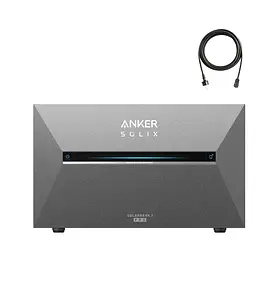
Anker SOLIX Solarbank 3 E2700 Pro, Balkonkraftwerk-Speicher 2,68 kWh, 4 MPPT
View at Amazon (as of Aug 11)Affiliate link. Buying through it earns us a commission; the price stays the same for you.
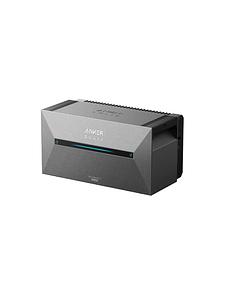
Anker SOLIX 2 Plus Solarbank (1,6 kWh)
View at AmazonAffiliate link. Buying through it earns us a commission; the price stays the same for you.
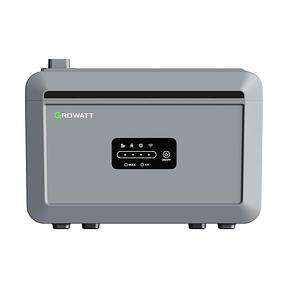
Growatt NEXA 2000 Balkonkraftwerk-Speicher (2.048 Wh)
View at AmazonAffiliate link. Buying through it earns us a commission; the price stays the same for you.
What 0% is actually worth
Germany's standard VAT rate is 19% (§ 12 (1) UStG). Where the zero rate applies, that surcharge falls away entirely: the price a retailer shows is both net and gross, and the invoice states 0% VAT.
The table below sets three real listed prices (amazon.de, checked 7 August 2026) against the amount 19% would add to the same figure. It is a comparison, not a statement about how any particular retailer issues its invoices:
| Unit | Listed price | 19% on that amount | Price with 19% |
|---|---|---|---|
| Anker SOLIX Solarbank 3 E2700 Pro | €999.99 | €190.00 | €1,189.99 |
| Growatt NEXA 2000 (Powerness) | €469.00 | €89.11 | €558.11 |
| Anker SOLIX 2 Plus Solarbank | €399.00 | €75.81 | €474.81 |
Read the other way — if you are looking at a price that includes 19% — the tax share is 19/119, or about 15.97% of the gross price (arithmetic derived from the rate itself, not a measured figure). €1,189.99 gross therefore comes back to €999.99.
For a complete set of modules, inverter and battery it scales accordingly: on €1,500 of goods, 19% is exactly €285.
Who does not benefit
Four situations fall outside the rule, or at least are not automatically inside it:
Mobile solar modules below 300 watts. Explicitly excluded, per the BMF quote above.
Power stations with no solar link. A portable power station bought mainly as blackout backup or for camping does not store electricity from qualifying solar modules — it stores grid electricity. It also sits well below 5 kWh in nearly every case, so the simplification does not apply and the "exclusively" test could not be met. Sizing a power station is a separate exercise from the tax question.
Accessories with no system link. Power banks, chargers and USB accessories are not components "essential to operating a photovoltaic system" within the meaning of the provision.
Installations with no residential or common-good link. The location condition in no. 1 is part of the rule.
Retrofitting: does the zero rate still apply later?
Yes — and this is the practically most useful answer for anyone who bought a balcony system without a battery first. On extending an existing installation, the BMF FAQ says:
"Erfolgt die Erweiterung (z. B. Lieferung/Installation eines Batteriespeichersystems oder anderer wesentlicher Komponenten als Ergänzung einer Alt-Anlage) nach dem 1. Januar 2023, fällt beim Kauf der Komponenten einschließlich der Installation keine Umsatzsteuer an."
Where the extension — expressly including the supply or installation of a battery storage system as an addition to an existing installation — takes place after 1 January 2023, no VAT arises on the purchase of the components including installation. (BMF FAQ, as of 23 June 2023, source as above)
The extension follows the rule in force at the time of the extension, not the date the system was first installed. A balcony system bought in 2021 and fitted with a battery in 2026 qualifies for the battery.
The myth that comes back every December
Around each turn of the year the claim circulates that the zero rate is expiring and 19% returns in January. The BMF answers the question of a time limit in one word:
"Nein, die Regelung ist nicht zeitlich befristet."
No, the rule is not time-limited. Also there: "§ 12 Absatz 3 UStG ist am 1. Januar 2023 in Kraft getreten" — the provision entered into force on 1 January 2023. Neither the statute nor the FAQ carries an end date. (BMF FAQ, as of 23 June 2023, source as above)
That does not mean the legislature can never change the rule. It means no time limit exists that could lapse. Anyone reading the opposite should ask for the citation.
What you have to do: practically nothing
The zero rate is not an application and not a refund. It operates at the point of sale: the retailer applies it, the invoice shows 0% VAT, and the listed price is the final price. Three things are still worth doing:
- Check the invoice. A VAT amount on an invoice where the conditions are met is a matter for the retailer, not the tax office.
- Keep the paperwork. Invoice, product data sheet and — where it exists — the Marktstammdatenregister entry together document the system and the solar link. That is precisely the individual-case evidence the BMF FAQ refers to for batteries under 5 kWh.
- Consider buying a set. Buy modules and battery in one transaction and the battery's purpose never becomes a discussion.
This article describes the legal position and is not tax advice. Assessment of an individual case is a matter for the competent Finanzamt or a qualified German tax adviser.
Sources
§ 12 Umsatzsteuergesetz, gesetze-im-internet.de — wording of paragraph 3 nos. 1 and 4, retrieved 7 August 2026
BMF, FAQ "Umsatzsteuerliche Maßnahmen zur Förderung des Ausbaus von Photovoltaikanlagen" — as of 23 June 2023; the 300-watt threshold, the 5 kWh simplification, extensions to existing installations, no time limit
BMF circular of 27 February 2023 on the zero rate for certain photovoltaic systems (PDF) — administrative instruction to the VAT Application Decree
Product and price data: amazon.de, retrieved 7 August 2026
All products from this post
The ones we named above are marked; the rest are alternatives in the same category.
Affiliate notice: As an Amazon Associate, we earn from qualifying purchases. Product prices and availability are subject to change.
Frequently Asked Questions
Does the zero rate apply to a balcony battery under 5 kWh?
Yes, but not automatically. From 5 kWh of usable capacity the tax authority presumes, per the BMF FAQ, that the battery stores electricity from qualifying solar modules. Below that, the zero rate applies where it is shown in the individual case that the battery is used exclusively for solar electricity from qualifying modules. For a device sold as a balcony solar battery and wired directly to solar modules, that link is normally straightforward to document.
From what output does a balcony solar system qualify?
From 300 watts. The BMF FAQ expressly names balcony power plants "of 300 watts and more" as covered, and just as expressly excludes mobile solar modules below 300 watts, such as those for camping. The 30 kW (peak) limit in the statute is effectively irrelevant for plug-in solar, because a balcony system sits far below it.
How much does the 0% VAT rate save me?
Exactly the amount 19% VAT would come to. On a battery at €999.99 that is €190.00; at €469.00 it is about €89.11; at €399.00 about €75.81. Read the other way, a price that included the tax would carry a tax share of 19/119, roughly 15.97 percent of the gross amount. The prices are snapshots taken on 7 August 2026.
Do I still get the zero rate if I add the battery later?
Yes. The BMF FAQ states that where an existing installation is extended after 1 January 2023 — expressly including the supply or installation of a battery storage system — no VAT arises on the purchase of the components including installation. The age of the balcony system itself does not matter for this.
Is the zero rate expiring at the end of the year?
No. The Federal Ministry of Finance answers the question of a time limit in its FAQ with the statement that the rule is not time-limited. § 12 (3) UStG entered into force on 1 January 2023 and contains no end date. Claims to the contrary around the turn of the year have not cited a source in the statute or in any administrative instruction.
Does 0% also apply to a portable power station?
Usually not. What qualifies is a battery that serves to store the electricity generated by solar modules. A power station charged mainly from the grid and bought for camping or as a blackout reserve does not meet that purpose test, and it sits below the 5 kWh threshold at which the tax authority presumes the solar link without further evidence.
Sources
- § 12 UStG, gesetze-im-internet.de gesetze-im-internet.de
- BMF, FAQ "Umsatzsteuerliche Maßnahmen zur Förderung des Ausbaus von Photovoltaikanlagen", as of 23 June 2023 bundesfinanzministerium.de
- BMF circular of 27 February 2023 on the zero rate for certain photovoltaic systems (PDF) bundesfinanzministerium.de