Stiftung Warentest 2026: All 24 Power Banks Pass the Safety Test
 6 min read
As of: 07 January 2026
Batteries burning in aircraft cabins, tightened hand-luggage rules, recalls still running on individual models: anyone following power bank news over the past few months has mostly been reading warnings. Against that backdrop, the headline finding of the new test from Stiftung Warentest — Germany's state-backed consumer testing foundation — stands out, because it points the other way.
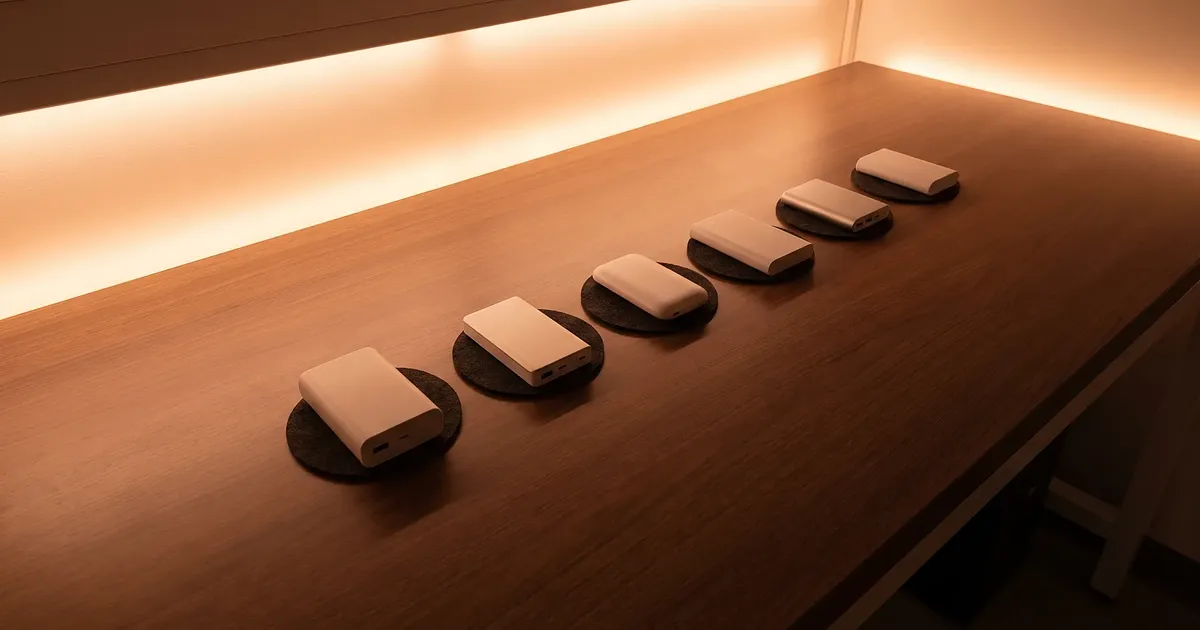
Twenty-four power banks from 18 brands were tested, among them Anker, Belkin, Samsung, Verbatim and Xiaomi. The test ran as issue test 2/2026 and was published on test.de on 07 January 2026. Not one of the 24 units caught fire or exploded during the safety tests.
What was actually tested
Every figure in this table comes from the freely accessible summary on test.de, as of 07 January 2026.
| Criterion | Value in the test |
|---|---|
| Units tested | 24 power banks |
| Brands | 18 brands |
| Capacity classes | 10,000 mAh and 20,000 mAh (rated capacity) |
| Price range | roughly 30 euros to roughly 100 euros |
| Grade range | gut (good) to ausreichend (sufficient) |
| Charging power | 18 watts to 200 watts |
| Usable energy, 10,000 mAh class | 28.5 Wh to 35.8 Wh |
| Usable energy, 20,000 mAh class | 58.3 Wh to 69.9 Wh |
| Individual grades and overall winner | not stated (paywalled, 4.90 euros) |
The sentence that matters
Stiftung Warentest words the safety result unusually plainly: "Erfreulich: Unsere Sicherheitstests überstanden alle Modelle ohne Brände oder Explosionen." — Pleasingly, all models came through our safety tests without fires or explosions (test.de, 07 January 2026).
That is not a clean bill of health for every power bank on the market. It is a statement about 24 units from established brands in the 30-to-100-euro bracket. The test says nothing about models below that price class, nothing about goods without CE marking, and nothing about batteries that have already been damaged. Within that field, though, the result is unambiguous — and it runs noticeably against the general news picture.
The caveat sits in the drop test
Passing the safety test is not the same as passing the drop test. Warentest continues: "Einige nahmen allerdings Schaden im Falltest, eines funktionierte danach überhaupt nicht mehr." — Some were damaged in the drop test, and one no longer worked at all afterwards (test.de, 07 January 2026).
Which models those were sits behind the paywall. In practice: a power bank that falls out of your bag onto asphalt is not automatically dead, but it can be, and at least one unit in the test was. A casing that is visibly deformed, or noticeably warm after a fall, is the point at which a cell should be retired rather than kept in service.
The 20,000 mAh class: up to 69.9 Wh usable
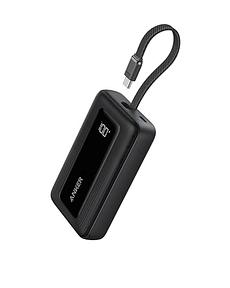
Between 58.3 Wh and 69.9 Wh of usable energy is a spread of roughly 20 percent within one class — from units carrying the same rated capacity on the label. That, not safety, is where the buying decision now sits. One typical unit in this class with a built-in USB-C cable is the Anker Zolo Powerbank (2025 Upgrade), 20000mAh, 30W High-Speed-Ladegerät mit integriertem USB-C Kabel, Akku-Pack für iPhone 17/16/15-Serie, Galaxy und mehr, rated at 20,000 mAh by its manufacturer. Where it places in the Warentest ranking is not publicly visible.
Affiliate link. Buying through it earns us a commission; the price stays the same for you.
The 10,000 mAh class: 28.5 to 35.8 Wh
In the smaller class the measured figures run from 28.5 Wh to 35.8 Wh. If you only need to refill one phone once, that is enough — and these units stay comfortably below the 100 Wh threshold that matters in air travel. A compact model in this class is the INIU Powerbank 10000mAh 22.5W Kompakt, rated at 22.5 watts output by its manufacturer.
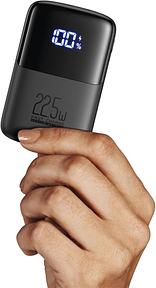
INIU Powerbank 10000mAh 22.5W Kompakt
View at Amazon (as of Aug 10)Affiliate link. Buying through it earns us a commission; the price stays the same for you.
What stays behind the paywall
The individual grades, the ranking and the overall winner cost 4.90 euros on test.de. Only the framework figures quoted above are free. Anyone looking for a buying recommendation without paying will not find one at Warentest. An alternative in the same 20,000 mAh class, rated at 45 watts output by its manufacturer, is the UGREEN Nexode Power Bank 20000mAh 45W mit integriertem USB-C Kabel. The same caveat applies: this is not a Warentest recommendation, just a unit from the same tested capacity class.
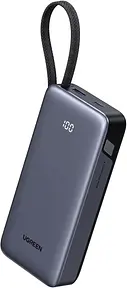
UGREEN Nexode Power Bank 20000mAh 45W mit integriertem USB-C Kabel
View at Amazon (as of Aug 11)Affiliate link. Buying through it earns us a commission; the price stays the same for you.
Bottom line
The 07 January 2026 finding is the most reassuring power bank news of the year so far, and it carries weight because it comes from the one German body that runs a lab for exactly this. For branded units in this price bracket, the safety question is largely settled. A different question is still open: how much of the printed capacity actually reaches your phone. Our piece on converting mAh to Wh covers that.
Sources
- Stiftung Warentest: Powerbanks im Test, test 2/2026, published 07 January 2026 — https://www.test.de/Powerbanks-im-Test-5019032-0/ (individual results paywalled, 4.90 euros)
All products from this post
The ones we named above are marked; the rest are alternatives in the same category.
Affiliate notice: As an Amazon Associate, we earn from qualifying purchases. Product prices and availability are subject to change.
Frequently Asked Questions
Are power banks safe after the 2026 Warentest?
For the 24 units tested, yes. Stiftung Warentest tested power banks from 18 brands on 07 January 2026 and records that all models came through the safety tests without fires or explosions. That statement covers branded units between roughly 30 and 100 euros. It does not transfer to damaged cells, or to cheap goods without CE marking, which were not represented in the test.
How many power banks did Stiftung Warentest test in 2026?
Twenty-four power banks from 18 brands, published on 07 January 2026 in issue test 2/2026. Anker, Belkin, Samsung, Verbatim and Xiaomi were among them. The test covered two capacity classes, 10,000 mAh and 20,000 mAh rated capacity, in a price range of roughly 30 to 100 euros.
Did any power bank break during the test?
Yes, but not in the safety test — in the drop test. Stiftung Warentest states that some models were damaged in the drop test and that one no longer worked at all afterwards. Which units were affected is part of the paid individual results and is not freely visible.
Who won the Stiftung Warentest power bank test?
That is not freely available. The individual grades and the ranking sit behind the test.de paywall and cost 4.90 euros. Only the framework figures are public: grades from good to sufficient, charging power from 18 to 200 watts, and usable energy per capacity class.