Germany's Nationwide Warning Day 2026: Why Emergency Experts Now Point to a Power Station
 5 min read
As of: 11.08.2026 · Status: SCHEDULED for 10.09.2026
The 2020 debut was officially declared a failure by the Federal Interior Ministry. Warning apps buckled, plenty of sirens stayed silent or fired late. Nationwide Warning Day 2026 arrives on 10 September with a better scorecard: according to the BBK survey on the 2025 Warntag published 24.04.2026, 82 percent of 117,073 respondents rated the last run as having gone well, up 10 percentage points year over year. That was an open online survey with self-selected participants, though, not a representative sample.
So the alerting chain keeps improving. What happens inside your flat afterwards is a separate job.
Nationwide Warning Day 2026: What Happens on 10 September
At 11:00, the Federal Office of Civil Protection and Disaster Assistance (BBK) triggers a test warning with the states and municipalities across every connected channel: sirens, Cell Broadcast to your phone, warning apps, radio, TV, digital signage. The all-clear follows at roughly 11:45. That's all Bundesweiter Warntag is, and all it's meant to be.
Reach in 2025 was decent. 97 percent of respondents got the alert through at least one channel, with Cell Broadcast strongest at 73 percent.
Don't mix it up: March was a different test
If you remember sirens going off in spring, you're right, but that was something else. On 12 March 2026, North Rhine-Westphalia, Bavaria, Hesse and Rhineland-Palatinate ran their own state-level warning days, with around 6,500 sirens in NRW alone. Bavaria wrapped its test at 11:30 according to the Bavarian State Ministry of the Interior.
Same toolkit, different level, different date. Checking whether your phone buzzed in March doesn't tick the Nationwide Warning Day 2026 box in September.
Why the BBK names a power reserve specifically
German blackout preparedness starts once the alert reaches you. Then what?
On its blackout preparedness page, the BBK writes, word for word:
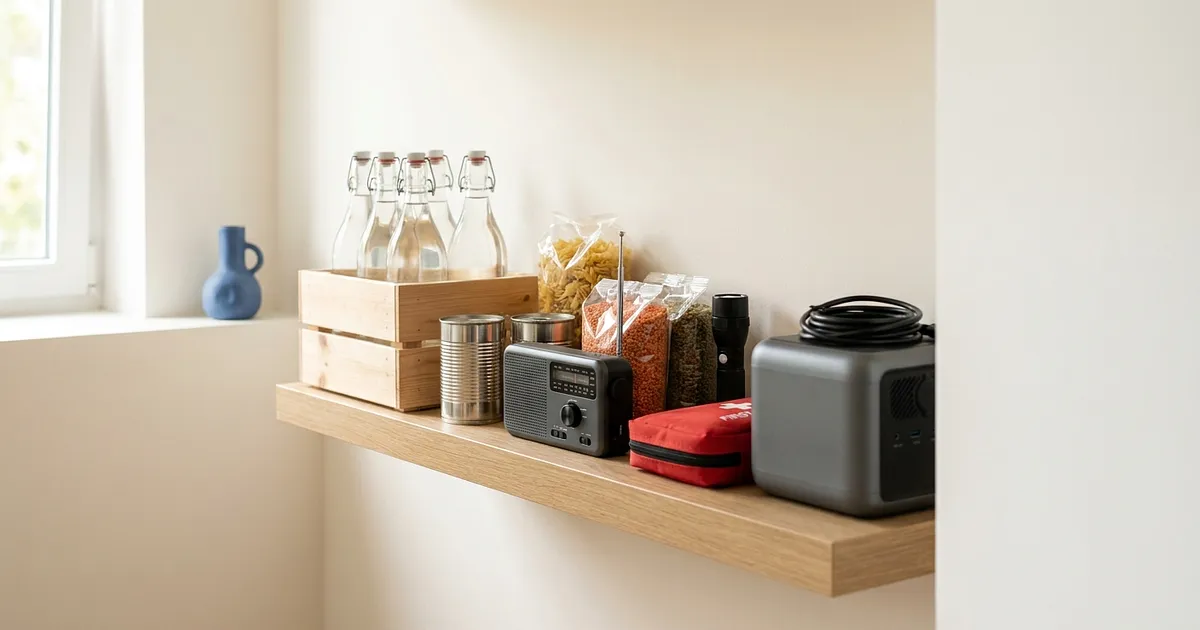
"Solarbetriebene Batterieladegeräte oder eine Powerbank können bei Stromausfall eine Hilfe sein." (Solar-powered battery chargers or a power bank can help during a power outage.)
It sits between the water supply, ten days of food, a torch and a battery-powered radio. The agency names no capacity. No port type either. That's where the official guidance stops and the buying decision starts. Nationwide Warning Day 2026 only makes that gap visible, it doesn't close it.
How long such an event can run is on record. During the Münsterland snow disaster of November 2005, around 250,000 people lost power, in places for several days. A large-scale nationwide blackout, by contrast, is "extremely unlikely" according to the BBK's own clarification. The realistic case is a regional outage lasting hours to days.
What actually matters in a power station
A power station is increasingly a core part of home emergency power supply, when it's sized to the situation.
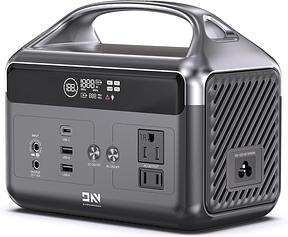
Capacity in watt-hours, not mAh. A 20,000 mAh power bank sits at roughly 74 Wh. That charges phones and nothing else. The 300 Wh class, such as the ALLPOWERS R600 Solar Generator Portable Power Station, 299Wh LiFePO4 at a manufacturer-stated 299 Wh, also keeps a router, LED lighting and a laptop going through an evening.
For multi-day coverage you need an order of magnitude more. The EcoFlow RIVER 2 Pro Portable Power Station, 768Wh LiFePO4 is rated 768 Wh and the Anker SOLIX C1000 Gen 2 Tragbare Powerstation, 1024Wh LiFePO4, 2000W Solargenerator 1024 Wh. Both are manufacturer specs rather than independent measurements, and usable energy always lands below the nameplate.
Outlets. A mains socket decides whether your router and chargers simply run.
Solar input. Any box is empty after two days. An input for a folding panel is the difference between a reserve and a single charge, and it's the half of the recommendation the BBK spells out by name.
State of charge. Ever checked when it last topped up? In the cupboard it only helps when it's full, and Nationwide Warning Day 2026 probably works best as an annual check date.
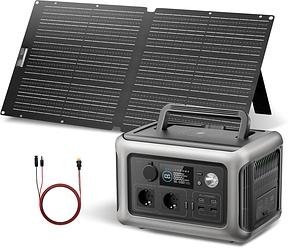
ALLPOWERS R600 Solar Generator Portable Power Station, 299Wh LiFePO4
View at AmazonAffiliate link. Buying through it earns us a commission; the price stays the same for you.
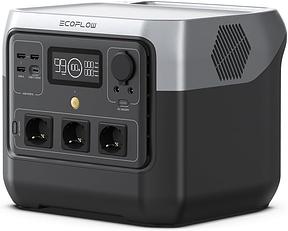
EcoFlow RIVER 2 Pro Portable Power Station, 768Wh LiFePO4
View at AmazonAffiliate link. Buying through it earns us a commission; the price stays the same for you.
Not available in your region — closest match
View at Amazon (as of Aug 15)Affiliate link. Buying through it earns us a commission; the price stays the same for you.
The BBK Checklist for Nationwide Warning Day 2026
There's nothing to invent. The BBK offers its blackout preparedness brochure as a free download, covering water, supplies, light, cash and communication. And the agency knows where the gap sits: only 43 percent of respondents felt well informed in 2025 about the risks relevant to them.
So the phones will buzz again for Nationwide Warning Day 2026 on 10 September. The more interesting question is what else you check that day.
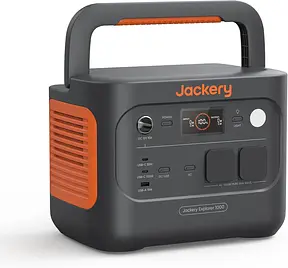
All products from this post
The ones we named above are marked; the rest are alternatives in the same category.
Affiliate notice: As an Amazon Associate, we earn from qualifying purchases. Product prices and availability are subject to change.
Frequently Asked Questions
When is Germany's Nationwide Warning Day 2026?
Thursday, 10 September 2026. The test alert goes out from 11:00 across every connected channel, and the all-clear follows at roughly 11:45. The date traditionally falls on the second Thursday in September.
What actually happens on Warning Day?
The BBK triggers a test warning together with the states and municipalities. It travels via sirens, Cell Broadcast, warning apps such as NINA and KATWARN, radio, TV and digital signage. What gets tested is the alerting chain, not your household readiness.
Is the March warning test the same as the September one?
No. On 12 March 2026, state-level test alarms ran in North Rhine-Westphalia, Bavaria, Hesse and Rhineland-Palatinate. The Nationwide Warning Day on 10 September is federally coordinated and covers every state at the same time.
Which power station is enough for a home blackout?
What to do in a power outage at home? It depends on what needs to stay on. For a phone, router and light through one evening, the 300 Wh class does the job. If several devices should run for days, the sensible range starts around 700 to 1000 Wh. A solar input stretches all of those numbers considerably.
Sources
- BBK survey on the 2025 Warntag bbk.bund.de
- Bundesweiter Warntag bbk.bund.de
- state-level warning days land.nrw
- Bavarian State Ministry of the Interior bayern.de
- blackout preparedness page bbk.bund.de
- Münsterland snow disaster of November 2005 bbk.bund.de
- BBK's own clarification bbk.bund.de
- blackout preparedness brochure bbk.bund.de